
Make sense
of the law
in front of you.
Start with a question in your own words. Learn the terms, explore the sources and organize what you find so you can take a more informed next step.
Standard · $24.95 per person, per month.
14-day trial; cancel before it ends and you pay nothing. See plans and billing details.
A clearer way to research.
Ask and follow up
Use Ask for a focused question or Conversation to explore it further. Include the location and relevant date to give the research useful context.
Ask & Conversation →Read a document more closely
Analyze a notice or agreement, identify terms worth understanding and follow up with research about particular passages.
Document Analysis →Return when you need it
Reopen completed Ask results in My Research. The saved answer keeps its citation assessments and the source dates it was checked against.
My Research →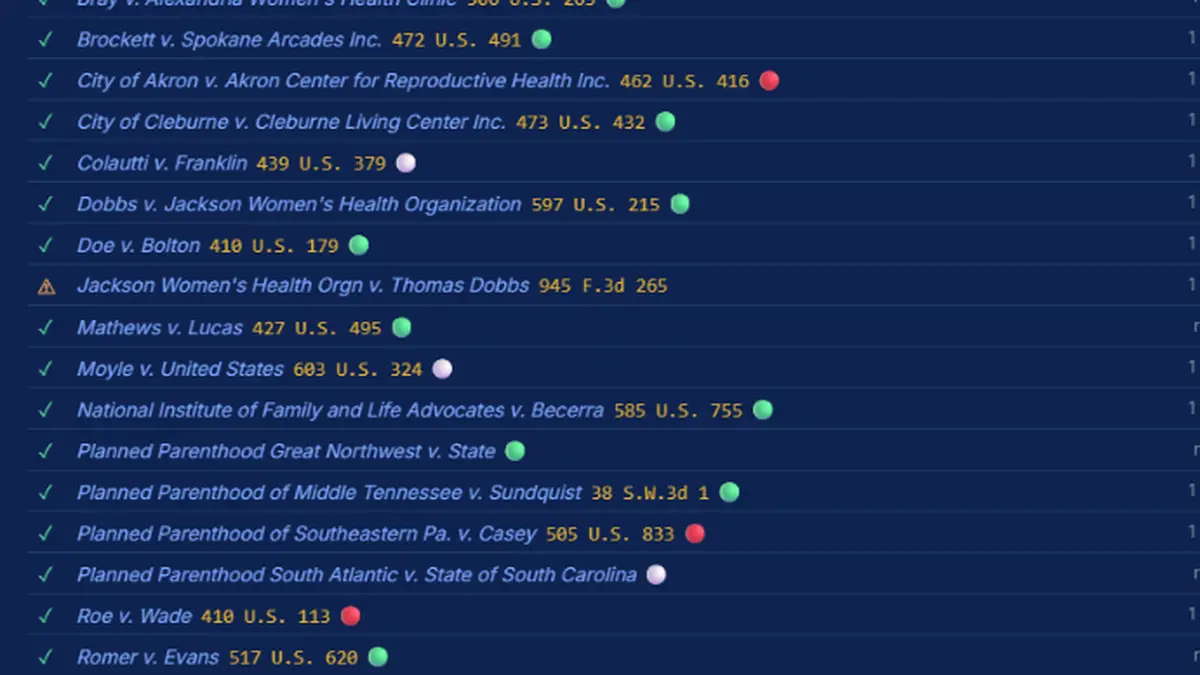
Flagged before you rely on it.
Every authority in the Table of Authorities is checked twice. The citation is resolved to a document in the library, and Mind’s Eye scans later decisions for how the case was treated.
- Green: no adverse treatment found in checked material.
- Yellow: caution, distinguished or criticized.
- Red: negative treatment found. Review the scope before you cite it.
A first-pass signal, not a clean bill of health: confirm with a full citator before relying on it.
How federal law defines its own words.
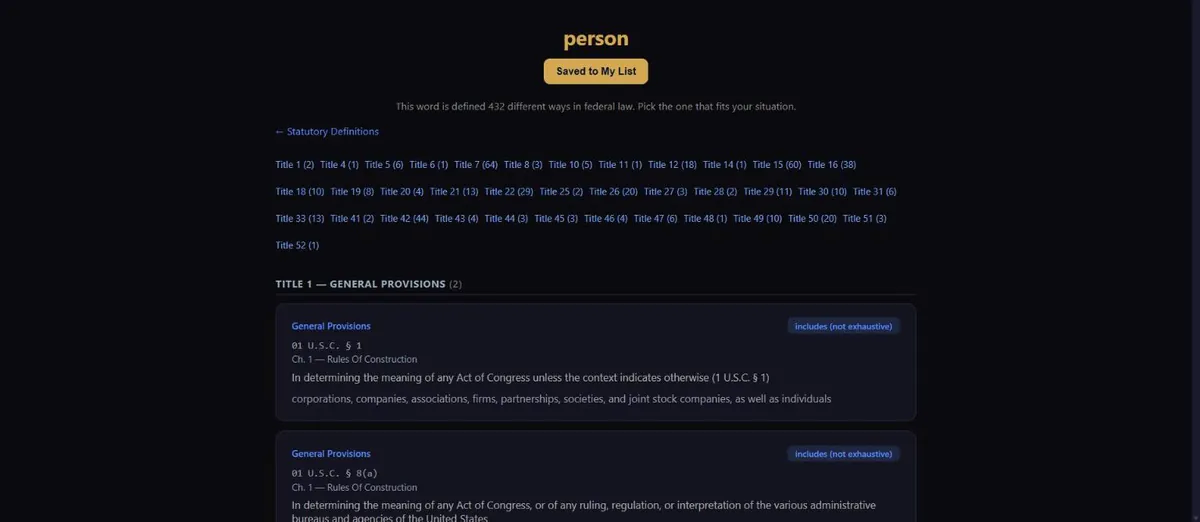
“person” is defined 432 different ways in federal law. The statutory dictionary shows every definition the U.S. Code gives a term, quoted verbatim, with whether it is exhaustive and exactly where it applies.
Pick the one that fits your situation, then open the section it came from.
Start with an unfamiliar word.
The public dictionary and encyclopedia are available to browse without an account. They can help you find the vocabulary for a better research question.
Dictionary · Encyclopedia · Statutory definitions · Legal library
One path from the question
to the source text.
Keep the analysis, the citation checks and the source links together, then return to completed work in My Research.
What $24.95 a month includes.
- Ask and ongoing Conversations
- Legal library search and source inspection
- Table of Authorities and available citation checks
- Document upload and analysis
- My Research for completed answers
- Saved items, folders and notes
Before you get started.
- Is this legal advice?
No. Access to legal information is not the practice of law. The Law Mind operates as a research library — not a law firm, not a legal services provider, and not a substitute for the independent judgment of a licensed attorney who has reviewed your specific facts and jurisdiction. Use of the Service does not create an attorney-client relationship between you and The Law Mind or its operators. Law Mind is a library and a drafting tool; the lawyer reads the sources and decides.
From the Terms of Service
- What is covered?
Law Mind researches your question against state and federal source collections and shows the authorities behind the answer: the Table of Authorities, the source text, citation and quotation checks, and available later-treatment signals. State and federal collections of court opinions, statutes, regulations, court rules and reference material, including the legal and Latin dictionaries, the encyclopedia and historical works. Each collection lists what it holds, and each document shows its edition and source date. Case law is current through September 30, 2026.
From the site’s FAQ
- What happens to my documents?
We do not use your prompts, uploaded documents, conversation history, or AI-generated outputs to train, fine-tune, or develop our AI models or those of any third-party provider. Your research activity is your business, not our training data. We do not sell your personal data to advertisers, data brokers, or any third party. We do not share personal data with third parties for their own marketing purposes. Submission of privileged information to the Service does not create an obligation for The Law Mind to maintain privilege. You are responsible for evaluating whether use is consistent with applicable professional responsibility rules.
From the Privacy Policy
Keep learning. Keep your research.
Standard includes Ask, Conversation, document analysis, source inspection and My Research.